Arduino Case CAD
A design for a rugged, outdoor capable Arduino case.
Designed for Easy 3D Printing and Durability.
Research
The project focused on developing an Arduino-based environmental monitoring system housed in a custom 3D-printed enclosure, designed to track temperature (-10°C to 40°C) and humidity (30–80%) for applications like agricultural monitoring or climate controlled storage.
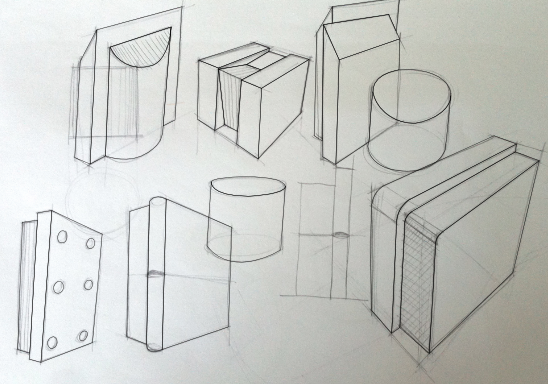
Research included iterative prototyping of four enclosure designs, with 1.6mm double walled ABS selected for its chemical resistance and durability over PLA/TPU alternatives.
Sensor integration involved testing the DHT11 and LM35 modules for accuracy, alongside RGB LED matrices to visualize data.
User requirements were derived from hypothetical gardening/3D printing scenarios, passive cooling, IP54 equivalent dust/water resistance, and modularity for future expansion
Vision
The vision centers on creating a rugged, outdoor capable environmental monitoring system using an Arduino Uno and RGB LED shield. The enclosure aims to visually communicate sensor data through programmable LED sequences
A secondary goal involves optional audio alerts via tilt activated speakers for extreme conditions, though this feature requires future hardware integration.
Using software such as FreeCAD and Blender, alongside regular pen and paper for prototyping and designing.

Design
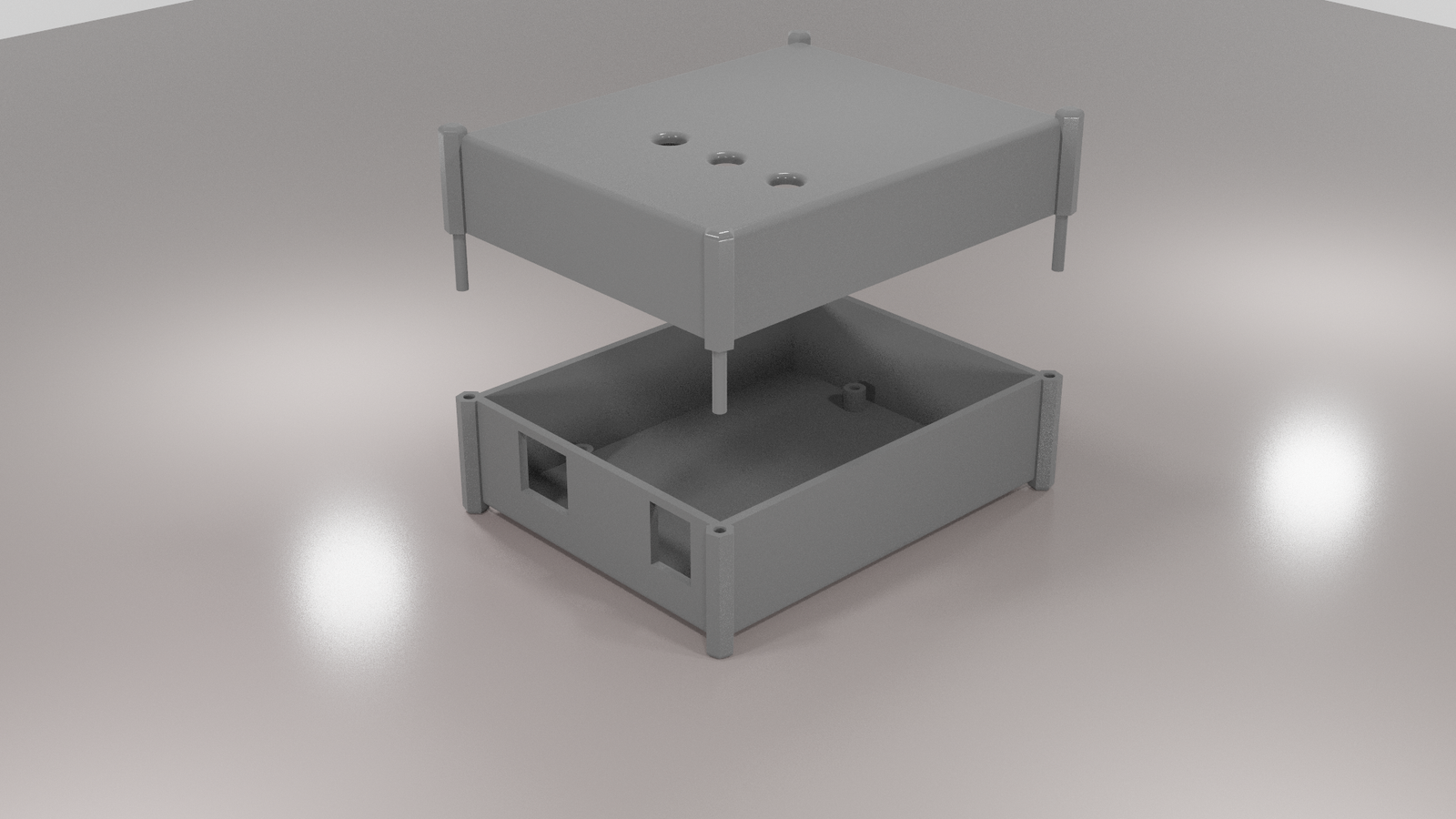
The design is a screwless, two part enclosure for the Arduino Uno with an RGB LED shield.
The case uses 1.6mm thick walls and friction-fit tabs at each corner for secure closure, eliminating the need for screws.
It features precise cutouts for ports and LEDs, internal mounting points for stability, and pentagon shaped corner reinforcements for strength and airflow.
Beveled edges and LED holes enhance both appearance and light distribution. The design prioritizes durability, ease of assembly, and efficient use of space.